
Why P95 Latency Matters: What ProxyVero Measured for anyIP
Table of Contents
Key takeaways
P95 latency is the time within which 95% of requests complete, so it shows how slow the slowest requests get.
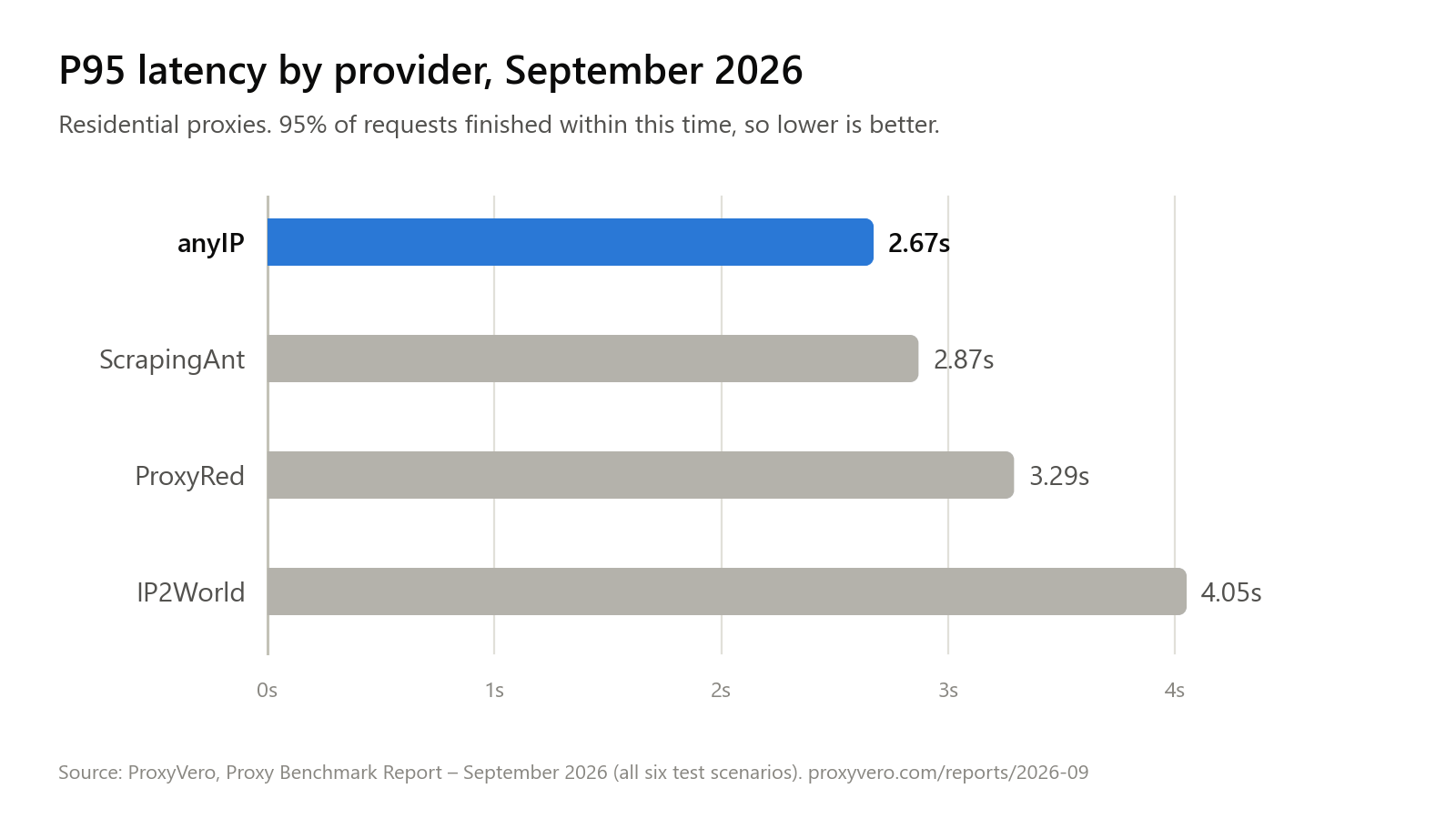
In ProxyVero’s September 2026 benchmark report, anyIP had the lowest P95 latency of four residential providers (2.67s).
ProxyVero updates its results daily, so its live pages may show different figures.
Average latency is usually the first metric most teams and specialists check when choosing a proxy provider. No wonder, since latency indicates how fast proxies are and how well they can handle your operations.
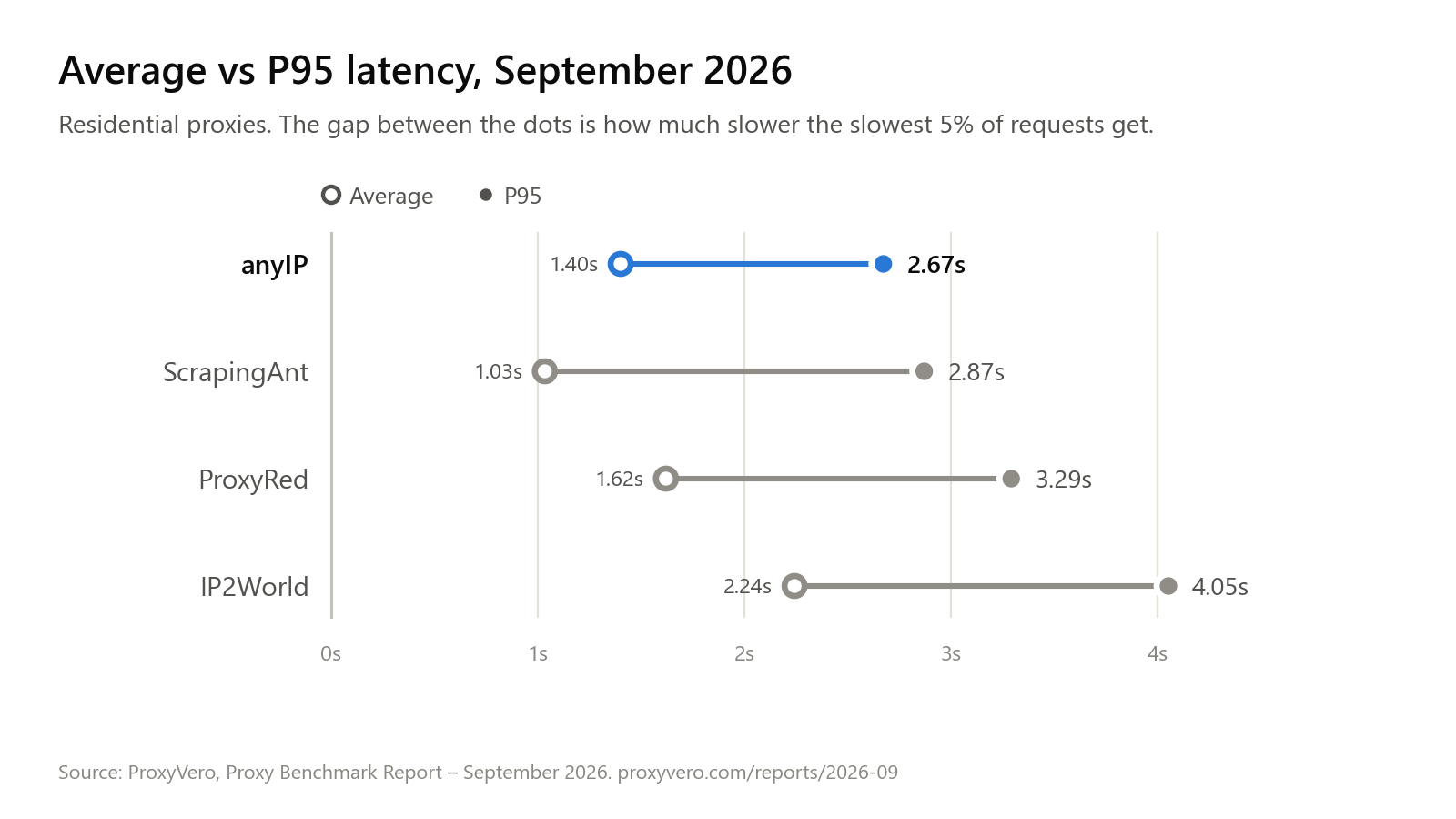
The problem is that an average blends fast and slow requests into one number, so it can hide the slow or stalled ones. In scraping or automation, those are the requests that time out and break a pipeline. That slow tail is exactly what P95 latency measures.
What P95 latency actually tells you
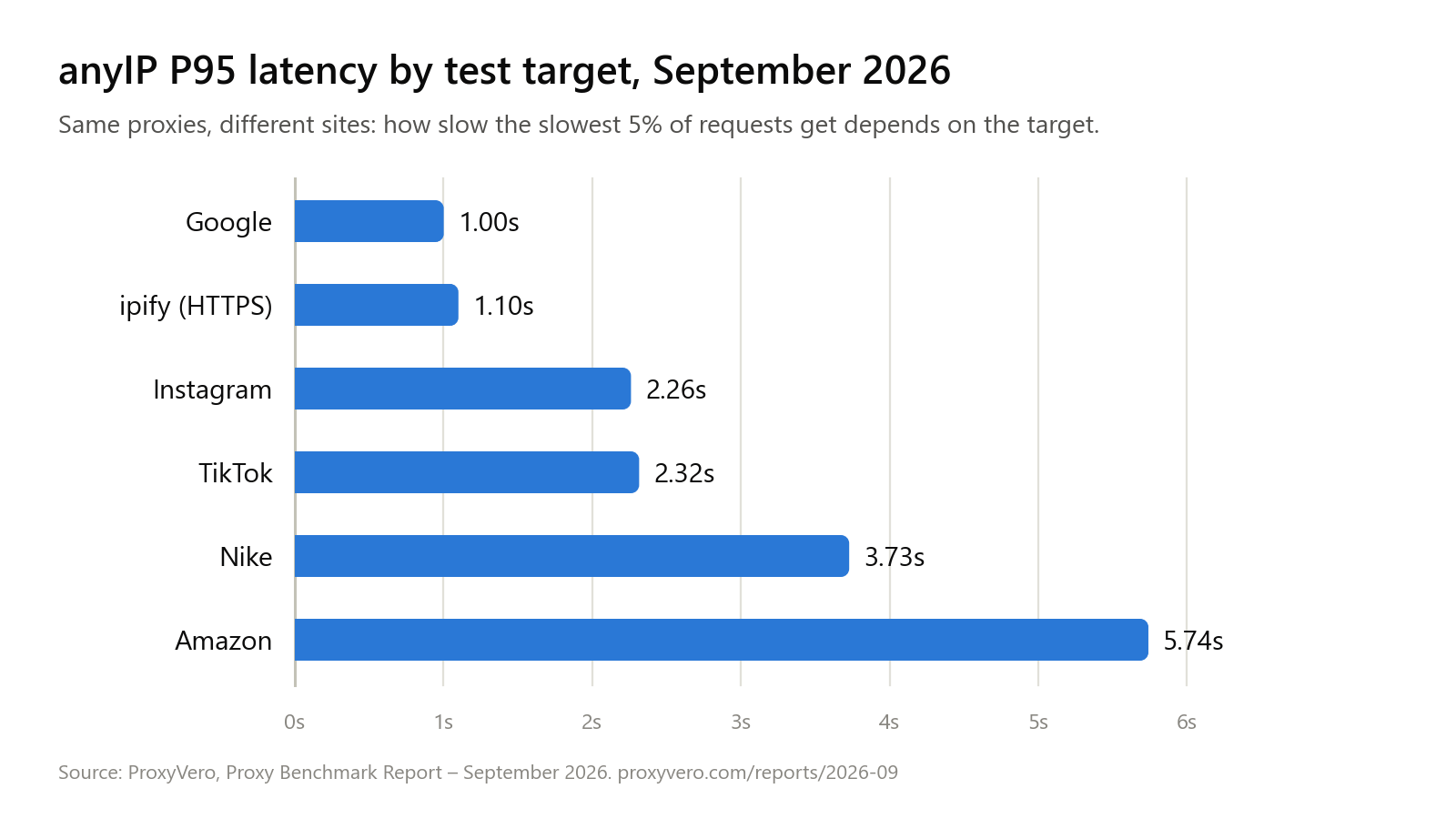
P95 latency is the 95th percentile of response times: 95% of requests complete within this time. The other 5% are the requests that take longer to complete. If a proxy’s P95 is 2 seconds, 19 out of 20 requests finish in 2 seconds or less.
In short, P95 shows how slow your slowest requests get, for example under heavy load or when something goes wrong. It’s also worth comparing providers on the same tests, because each provider measures its own speed figures in its own way.
Source: ProxyVero. (2026). Proxy Benchmark Report — September 2026. ProxyVero. https://www.proxyvero.com/reports/2026-09/
If you’re choosing a reliable proxy service, it’s a good practice to check independent third-party benchmarks.
What ProxyVero measured
ProxyVero, which describes itself as an independent benchmarking platform, runs the same test requests through each provider against real-world targets such as Amazon and Google, and updates its results daily. Its September 2026 report covered 80 providers and 6 test scenarios.
Source: ProxyVero. (2026). Proxy Benchmark Report — September 2026. ProxyVero. https://www.proxyvero.com/reports/2026-09/
In ProxyVero’s September 2026 report, anyIP had the lowest P95 latency of these four residential providers: 2.67s, against 2.87s for ScrapingAnt, 3.29s for ProxyRed, and 4.05s for IP2World. ScrapingAnt had a lower average latency (1.03s against anyIP’s 1.40s), but its slowest requests took longer.
Source: ProxyVero. (2026). Proxy Benchmark Report — September 2026. ProxyVero. https://www.proxyvero.com/reports/2026-09/
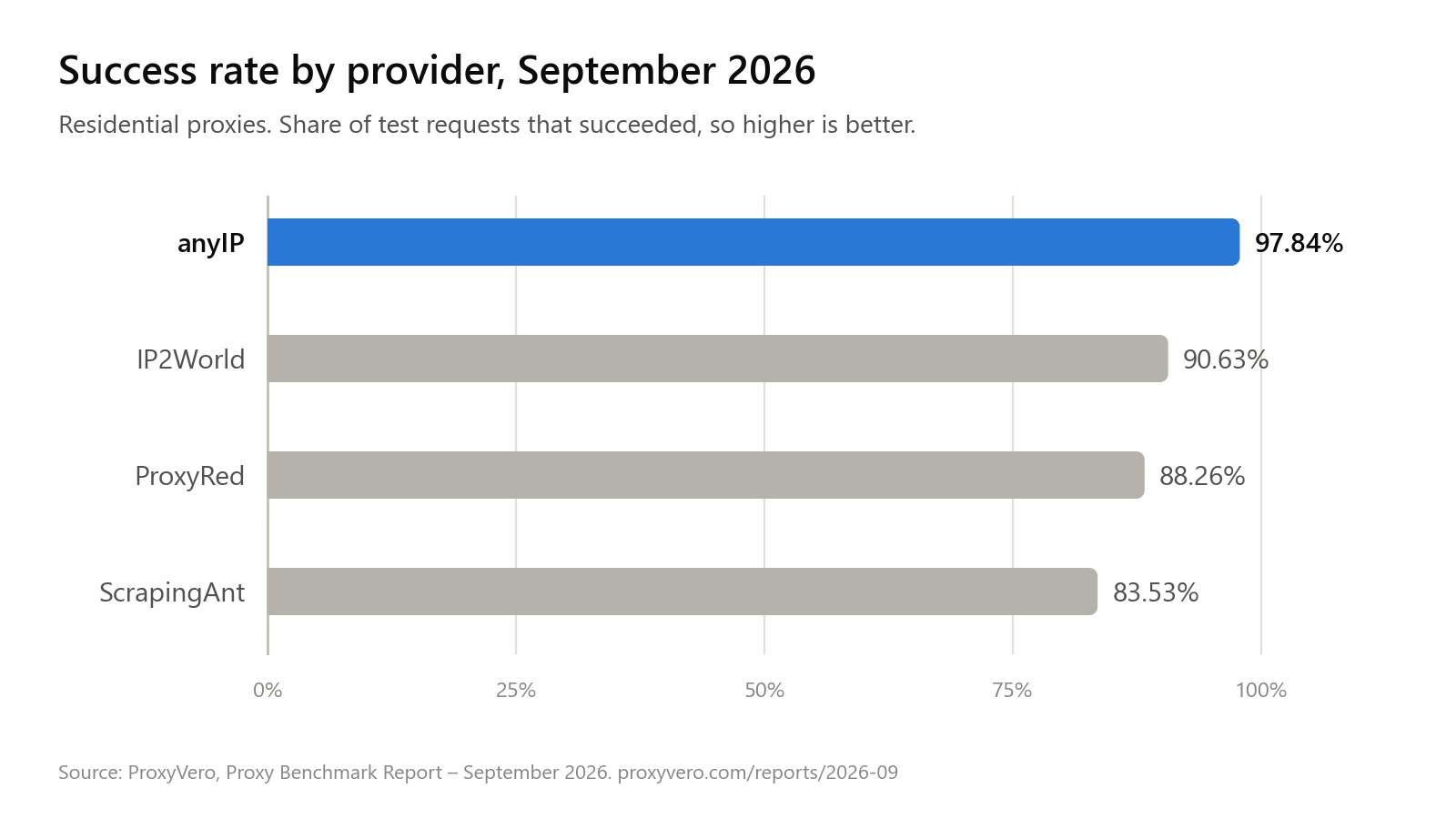
anyIP also had the highest success rate in the set (97.84%) and the lowest block rate (1.44%). One caveat: ProxyVero started testing anyIP on Sep 21, 2026, so its September figures cover the last 10 days of the month (555 requests).
What this means for anyIP customers
anyIP offers residential and mobile proxies in one plan, with 100M+ IPs across 38+ countries.
In simpler terms, these results suggest that anyIP:
Has more predictable request times: A low P95 means fewer slow outliers in web scraping, SEO monitoring, and automation workflows, so you can set tighter timeouts instead of padding them for worst-case requests.
Has fewer retry attempts and timeouts: Every failed or blocked request has to be retried, which costs time and bandwidth, and anyIP had the fewest failed and blocked requests in the set that month.
Has clear per-GB pricing: ProxyVero lists anyIP at $5.00/GB, which is anyIP’s entry rate. Larger anyIP plans go down to $2/GB.
Source: ProxyVero. (2026). Proxy Benchmark Report — September 2026. ProxyVero. https://www.proxyvero.com/reports/2026-09/
Where to see live results
ProxyVero keeps testing daily, so its live pages may show different figures from the September 2026 figures above. To check the latest results yourself, start here:
The takeaway
An average latency figure blends all requests into one number. P95 tells you how slow a provider’s slowest requests get, and that is what decides your timeouts and retries.
In ProxyVero’s September 2026 report, anyIP combined the lowest P95 latency of the four residential providers (2.67s) with the highest success rate (97.84%).
Every anyIP plan includes both residential and mobile proxies, so you can run the same kind of test on your own targets, starting with the 5 GB Micro plan.
Article by
Khaled Bentoumi
Khaled is a software engineer. He's been involved in many startups of different sizes. Previously, he founded Data to Page, an AI Programmatic SEO startup. He now handles all the marketing at anyIP.


Read more
Scamalytics Proxy Detection Explained
Learn how fraud scores work, what the proxy and residential labels mean, and how to read a Scamalytics result for your own IPs.


Proxy vs VPN vs Antidetect Browser: Which to Choose?
Compare proxy vs VPN vs antidetect browser by IP address control, encryption, browser fingerprints, scalability, and the best use case for each.
What Is TCP/IP Fingerprinting and How Does It Work?
Learn what TCP/IP fingerprinting is, how it works, what it can reveal, and how proxies, VPNs, and network devices affect your fingerprint.